

Published: November 2026
Every year, more buyers look past the suburbs for land: a few acres outside Decatur, a place near Bowie or Sunset, room for horses, a shop, or just some quiet. Late fall and winter can be a good time to shop. There is less competition than in spring, and a property shows you how it handles cold nights and wet weather before you own it.
But a rural North Texas property is a different purchase than a house in a subdivision. The water comes from a well, not a city main. The wastewater goes into a septic system in the yard. Heat may come from propane or a wood stove. None of that is a problem if you know what you are buying. All of it can be expensive if you find out after closing.
Here is what a rural home inspection should cover in Wise, Montague and Jack counties, what needs a separate evaluation, and what winter adds to the list.
How Is a Rural Home Inspection Different From a Suburban One?
The house itself is inspected the same way: roof, attic, structure and foundation, plumbing, electrical, heating and cooling, and the visible interior and exterior. Be Informed Inspections walks all of it and delivers a written report with photographs.
For buyers purchasing acreage, a Buyer’s Home Inspection in North Texas helps provide a clearer understanding of the home’s accessible systems and components before closing.
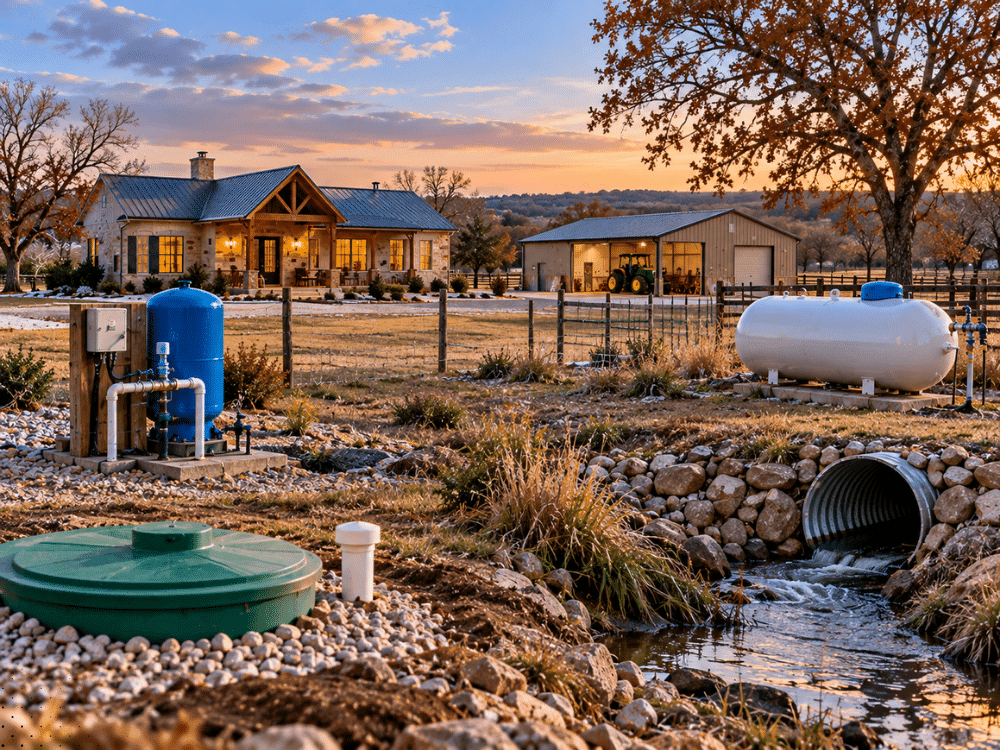
The difference is everything a city normally provides that a rural owner provides for themselves. On a property in Wise or Montague County, the buyer often takes on:
- A private water well, pump and pressure tank
- An on-site septic system, conventional or aerobic
- A propane tank and fuel supply, or a wood stove, for heat
- Long driveways, culverts and drainage the county doesn’t maintain
- Outbuildings, barns, shops and the electrical service that feeds them
A standard home inspection touches some of these and not others. Knowing which is which before your option period starts gives you time to arrange what’s missing.
What Should Buyers Know About the Well?
On a rural property, the well is the water supply, and it’s the owner’s responsibility. Private wells are not regulated the way a public water system is, so nobody tests the water unless the owner arranges it.
A home inspection looks at the parts of the water system that are visible and accessible: the pressure tank, the visible piping and connections, water pressure and flow at the fixtures, and the condition of the well house or enclosure where one exists. It does not evaluate the well itself, the pump down in the casing, or the quality of the water.
For those, buyers usually arrange separate services: a water quality test through a qualified laboratory, and a well evaluation by a water well contractor if the well’s age, output or condition is a concern. Ask the seller for any records they have, such as the well’s drilling log, age, depth and pump replacement history.
The winter angle: a well house, pressure tank and exposed piping need protection from freezing. During the inspection, look at whether the well house is insulated, whether it has a heat source, and whether any lines run exposed above ground. When a hard freeze does come through North Texas, those are the parts that fail first.
What Should Buyers Know About the Septic System?
In Texas, on-site sewage facilities are regulated by the Texas Commission on Environmental Quality, and permits and records are typically handled by the local permitting authority, often the county. Rural properties generally have either a conventional system or an aerobic treatment system.
A home inspection evaluates how the house’s plumbing drains, and reports visible problems in the yard such as surfacing effluent, odors, or sprinkler heads from an aerobic system spraying where they shouldn’t. It does not evaluate the tank, the treatment components or the drain field.
For a closer look at accessible underground sewer piping, buyers can also ask about a sewer scope inspection. This is a separate evaluation from a septic system inspection and does not replace an assessment by a qualified septic professional.
Ask for the permit and service records. The county or permitting authority may have the system’s permit on file, which tells you what was approved and when.
For aerobic systems, ask for the maintenance contract and service history. Aerobic systems have ongoing maintenance requirements. A buyer should know who has been servicing the system, how often, and what they found.
Consider a septic evaluation by a septic professional, particularly on an older system or one without service records.
The winter angle: the wet months are useful for judging a drain field. Soggy ground, standing water or odors over the field after a stretch of rain are signs a system may not be keeping up.
How Are Rural Homes Heated, and What Should Be Checked?
Many rural homes in Wise, Montague and Jack counties are heated with propane, electric heat pumps, a wood stove, or a combination. Heating season is a good time to inspect, because the system can be tested under real conditions.
Propane. The inspection looks at the gas appliances inside the house, their venting and their shutoffs. The tank, regulator and supply line belong to the propane supplier’s world. Find out whether the tank is owned or leased, who supplies it, and when it was last checked. If the property has been vacant, confirm the gas is on before the inspection so the appliances can be operated.
Wood stoves and fireplaces. The inspection covers the visible parts of the stove, hearth, clearances to combustible materials and the chimney exterior. The inside of the flue needs a chimney professional. Ask when it was last swept.
Heat pumps. A heat pump can usually be tested in heating mode in winter. The cooling side may not be tested if it’s too cold outside, since running cooling mode in low temperatures can damage the compressor. The report will note it.
Carbon monoxide and smoke alarms. With fuel-burning appliances in the house, working carbon monoxide alarms near sleeping areas matter. The U.S. Fire Administration publishes current placement guidance.
What Else on a Rural Property Should Be Looked At?
Foundation and soil movement. North Texas clay affects rural homes just as much as suburban ones. Look for the same signs: doors that stick, cracks at window and door corners, and separation in brick veneer.
Drainage and culverts. Long driveways, low-water crossings and culverts under the drive all affect access. Watch how water moves across the property after rain.
Outbuildings and their electrical. Barns, shops and detached garages are often wired well after the house was built, sometimes by the owner. Detached structures are not always part of a standard inspection, so ask when you schedule if you want them included.
Manufactured homes. Many rural properties include a manufactured home. The inspection looks at the same systems, plus the foundation or pier support, tie-downs where visible, and the skirting and crawl space.
Plumbing in the crawl space and exterior walls. Rural homes on pier-and-beam foundations often have supply lines exposed in a crawl space. Check whether they are insulated and whether the skirting is intact before a freeze.
For additional information about temperature variations and accessible building components, buyers can learn about thermal imaging inspections and discuss whether this service is appropriate for their property.
What Does a Home Inspection Cover in Texas?
A Texas home inspection follows the TREC Standards of Practice, which set the minimum scope: structural systems, roofing, foundation, exterior and interior, electrical, plumbing, HVAC, insulation and ventilation. It is a visual and operational evaluation of readily accessible components, not destructive testing, and not a code compliance inspection.
Well water testing, well evaluation, septic evaluation, wood-destroying insect inspection and inspections of outbuildings are separate services or add-ons. When you schedule, ask which of these Be Informed Inspections can perform and which should go to a specialist, so everything is arranged within your option period.
Q&A: What Rural North Texas Buyers Ask Most
Does a home inspection test the well water?
No. A home inspection looks at the visible water system, including the pressure tank, piping and water pressure at fixtures. Water quality testing is a separate service performed through a qualified laboratory, and it is worth doing on any property with a private well.
Does a home inspection include the septic system?
The inspection evaluates how the house’s plumbing drains and reports visible problems in the yard. The tank, treatment components and drain field need a separate evaluation by a septic professional. Ask the seller for the permit, service records and, for an aerobic system, the maintenance contract.
Is winter a bad time to inspect a rural property?
No. Heating systems can be tested under real conditions, and wet weather shows how drainage and septic drain fields perform. A few items, such as air conditioning in very cold weather, may not be testable, and the report will say so.
The property is vacant. What should I ask for before the inspection?
Ask the seller’s agent to have the power, water and gas or propane on. On a well, that includes power to the pump. Anything without utilities cannot be operated during the inspection.
Are barns and shops included in the inspection?
Not always. Detached structures are often an add-on. If outbuildings matter to your purchase, mention them when you schedule so the inspection is set up to include them.
What areas does Be Informed Inspections serve?
Be Informed Inspections serves the Dallas–Fort Worth metroplex and the surrounding North Texas communities, including Sunset, Bowie, Decatur, Alvord, Chico and the Wise, Montague and Jack County areas. Call to confirm availability for your property address.
Schedule Your Rural Home Inspection in North Texas
Land is a great buy when you know what comes with it. Before your option period runs out, find out.
Schedule your rural home inspection with Be Informed Inspections to better understand the home’s accessible systems and components before closing. Whether you’re purchasing acreage near Decatur, Bowie, Sunset, or elsewhere in Wise, Montague, or Jack County, contact the team to discuss your property and inspection needs.